
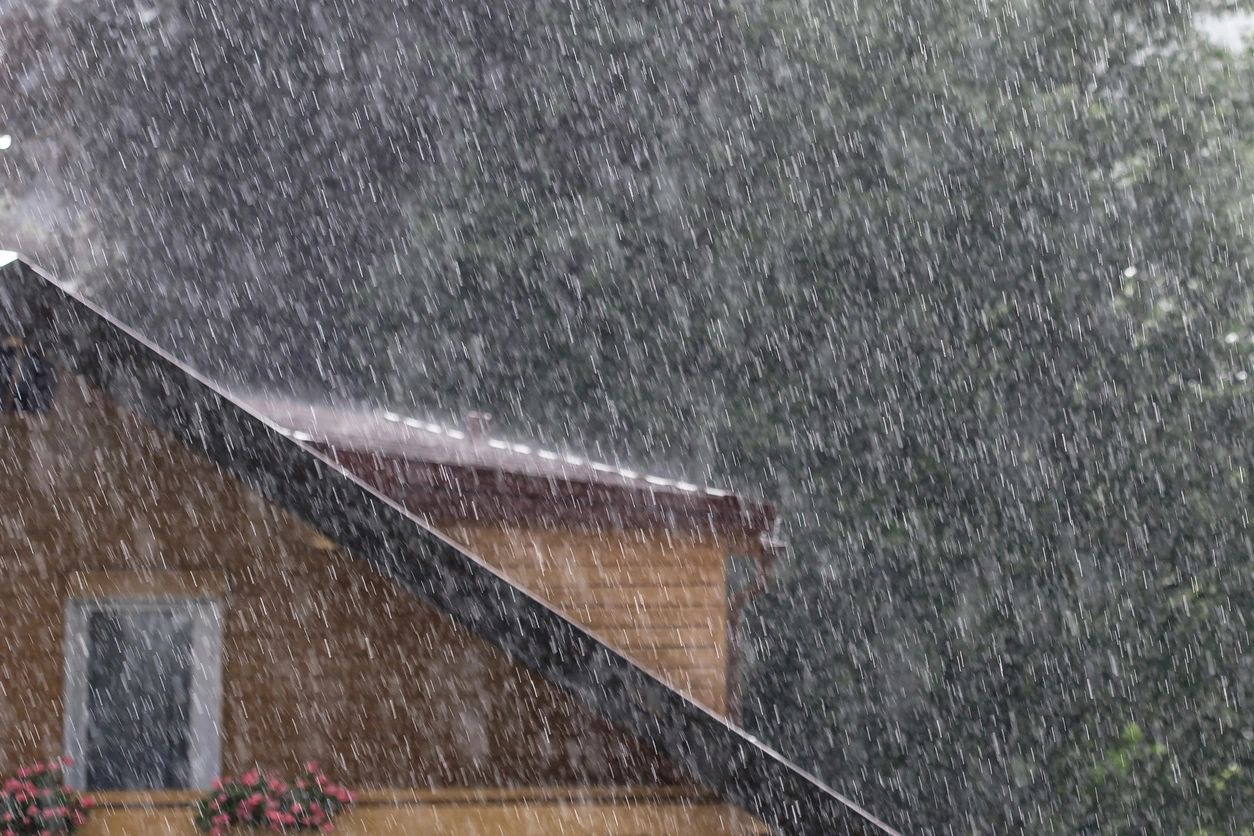
This section provides inspectors with basic information that they can convey to homeowners for making appropriate decisions and taking appropriate actions to keep their homes dry and comfortable. Use this information to effectively communicate with your clients about water management and moisture-damage prevention. Designing, building and maintaining homes that manage moisture effectively is a process of making good decisions. While builders and designers provide most of the up-front decisions -- such as designing the roof system, and specifying the foundation drainage details -- over the long term, the homeowner must understand basic moisture issues and make good decisions at the right times. There is already plenty of useful guidance for homeowners on what to do (and not do) regarding moisture. This section does not “reinvent the wheel” but will instead provide basic guidance for homeowners.
Most (if not all) moisture-related problems could become serious and expensive if not taken care of quickly and completely. Therefore, it is important for an inspector to call out or recommend further evaluation and/or repair by qualified professionals when any moisture intrusion is observed. if you are looking for a knowledgable and qualified home inspector in Vancouver be sure to give us a call.
Houses and Water Water, in its many forms, is an ever-present fact of life for a homeowner. Households can use hundreds of gallons of tap water on a daily basis. Lots of rainwater must be successfully shed by the roof and siding during rainstorms. Groundwater moves through the soil beneath the foundation. Indoor humidity levels are controlled for comfort. Moisture, in the forms of condensation and water vapor, is absorbed and released by the house itself. When a well-built home is properly maintained, water is a benefit and a pleasure. On the other hand, uncontrolled water in a home can cause damage. It can lead to mold growth, rotten wood and structural damage.
A House Repels Excess Water The exterior surfaces of a house, from roof to foundation, make up its envelope or "skin." The skin is designed to shed or repel excess water. If it doesn’t, expect trouble. When roof flashings, windows, foundation walls, and other building components are not properly maintained, rainwater will find its way in through vulnerable parts of the house. A House Absorbs and Releases Excess Moisture All houses must absorb and release moisture constantly in order to maintain a healthy balance. If the house has "breathing" problems, many types of moisture problems can develop. Trapped moisture -- dampness that cannot be released, for one reason or another -- is one of the primary causes of fungus and mold growth in a house. Fungi can literally eat wood, causing decay, rot and, ultimately, structural damage. Trapped moisture in the walls can destroy the value of the insulation and raise heating and cooling costs. Wood that stays damp attracts carpenter ants and other insects that can accelerate structural problems. A House Transports Piped Water Directly beneath the skin of the house is a complex maze of pipes carrying fresh water, as well as drain lines that dispose of water after its use. There are dozens of pipe joints and specialized fittings throughout the house, any one of which can develop a leak and cause moisture damage. A House Needs a Firm, Dry Foundation The best foundation is a dry foundation. A water-damaged foundation is extremely expensive to repair and can lead to damage in the rest of the house. Groundwater, floodwater or even rainwater from a misdirected downspout can undermine the foundation and cause settling cracks, wet floors and walls, and other undesirable conditions.
Common Sources of Moisture Damage Unwanted water can intrude through cracks in the protective skin of the house. It can also accumulate from interior moisture sources.
The following describe the most common sources of moisture problems at the exterior of a house.
Roof and Flashing Roofing materials can wear out, break, rust, blow off, or otherwise fail and expose the roof deck and structural components beneath to moisture intrusion and damage.
Most leaks occur around penetrations through the roof, such as at a chimney, plumbing vent, exhaust fan and skylight. Flashings and sealant joints around these penetrations can crack, fail and leak. Intersections of roof surfaces with walls are also common leakage points. Old or defective shingles can curl and crack, allowing moisture intrusion. If old shingles aren’t removed before new roof shingles are applied, they can reduce the life of the new roof. Chimney caps can crack, allowing water into interior areas of the chimney. Shingle edges can fail, forcing rainwater to accumulate between the roof and gutter. Flat and low-pitched roofs have unique maintenance needs and are susceptible to water problems because they may not drain as quickly as roofs with a steeper pitch. Flat-roof drains or scuppers can clog and hold water on the roof, increasing the risk not only of a leak, but also of a possible collapse of the entire roof under the weight of the water. Gutters and Downspouts Clogged gutters can force rainwater to travel up onto the roof under shingles, or to overflow and travel down the inside of the wall, or to overflow and collect at the home’s foundation. First-floor gutters can overflow if second-floor gutters have been mistakenly directed to drain into them. An insufficient number of or undersized downspouts can cause gutters to overflow. Downspouts that don’t empty far enough away from foundation walls can lead to foundation wall damage and a wet basement. Ice Dams Inadequate attic insulation allows heat to escape from the house into the attic, which can turn rooftop snow into an ice dam along the eaves. Ice dams frequently force moisture to back up under the roof shingles where it can drip into the attic and walls. Clogged and frozen gutters can act like ice dams, pushing moisture up under the shingles and into the house. Soffits and Fascia Damaged soffits (horizontal surfaces under the eaves) can allow snow and rain to be blown into the attic, damaging the insulation, ceilings and walls. Fascia boards (vertical roof-trim sections) can then become damaged, allowing the moisture from rain and snow into the attic and atop interior walls. Weep Holes Weep holes, which are designed to allow moisture to escape from behind walls, can become blocked. Weep holes can freeze, forcing moisture to back up inside the wall cavity. Weep holes can become clogged with landscape mulch, soil and other material. Landscape and Grading Landscape modifications may result in water drainage back toward the foundation, rather than away from it. A newly built home's lot may have been graded improperly, or the original foundation backfill may have settled over time, causing drainage problems. Automatic sprinklers may be spraying water onto or too close to the foundation walls. Window and Door Flashing and Seals Cracked, torn and damaged seals, weatherstripping, and flashing around windows and doors can allow wind-blown moisture to penetrate the house. Improperly installed windows and doors can allow moisture into the wall. Worn and failed weatherstripping can allow wind-driven rain to penetrate a closed window or door. Groundwater and Rainwater Groundwater or misdirected rainwater can collect during wet seasons along the foundation wall or beneath the floor or slab. Unless it is directed away from the structure by a sump pump or corrected drainage, this moisture can lead to mold growth, wall failure, and other destructive moisture problems. Condensation Condensation on windows can, at a minimum, damage windowsills and finishes. At worst, it can damage walls and floors. Condensation on un-insulated pipes can collect nearby or travel along a pipe to accumulate far from the original source. Condensation can form inside improperly built walls and lead to serious water damage and biological growth that are hidden from sight. HVAC Lapses in regular maintenance can lead to moisture and comfort problems, ranging from clogged drain pans to iced-up cooling coils and mold growth within the system. Failure to clean and service air conditioners regularly can lead to diminishing performance, higher operating costs, and potential moisture problems. Humidifiers can add too much moisture to a house, leading to dampness and mold. Sump Pump Neglecting to test a sump pump routinely -- especially if it is rarely used -- can lead to severe water damage, especially when a heavy storm, snow melt or flooding sends water against the home. Overload of the sump pump due to poor drainage elsewhere on the property can lead to pump failure. Frequent sump operation can be a sign of excessive water buildup under the basement floor due to poorly sloped landscaping, poor rain runoff, gutter backflows, and other problems. Lack of a backup sump pump, which can be quickly installed in the event that the first pump fails, can lead to serious water damage and property loss. This is especially important if the sump pump is relied upon to maintain a dry basement, or if the house is located in an area of seasonally high groundwater. Sump failure can cause extensive water damage and the loss of valuable personal belongings.