
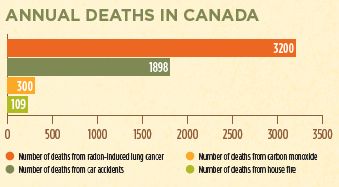
Most homeowners have heard of mold. Fewer have heard of radon and that's a problem, because Health Canada names it the second-leading cause of lung cancer after smoking. It's a naturally occurring radioactive gas that seeps up from the ground, and it's completely odorless, colorless, and tasteless. You cannot tell it's there without a test.
Metro Vancouver isn't considered a radon hotspot the way parts of the BC Interior are, but "lower risk" isn't "no risk." Radon levels vary house to house depending on the foundation, soil conditions, and how airtight the home is which means the only way to actually know your levels is to test.
What Is Radon, and Why Does It Matter?
Radon forms from the natural breakdown of uranium in soil and rock. It enters homes through cracks in foundations, sump pits, gaps around pipes, and other openings where the house meets the ground. Once inside, it can accumulate especially in basements and lower levels with limited air exchange.
Health Canada's guideline sets the action level at 200 Bq/m³ (becquerels per cubic metre) annual average. Above that, the recommendation is to take mitigation action; the higher the level and the longer the exposure, the greater the health risk.
Why Vancouver Homes Aren't Automatically "Safe"
A few local factors are worth knowing:
Older housing stock. Many Vancouver and Fraser Valley homes have basements or crawlspaces with foundation cracks or unsealed penetrations easy entry points for soil gas.
Tighter building envelopes. As homes get renovated or built to higher energy-efficiency standards (more insulation, better air sealing), less outdoor air exchanges with indoor air. That's great for heating bills, but it can also let radon concentrations build up rather than dissipate.
Micro-climates in soil conditions. Radon potential can vary significantly from one lot to the next, even within the same neighbourhood, depending on underlying geology. A neighbour's clean test doesn't tell you anything about your own home.
When You Should Test
Before buying a home - especially one with a basement, crawlspace, or slab-on-grade foundation.
Before selling - a clean radon test can be a point of buyer confidence and remove a negotiation variable later.
After a major renovation - air sealing, new windows, or basement finishing can change how air moves through your home.
In a new build - tighter modern construction doesn't guarantee low radon; it changes how gas behaves once it's inside.
Every two years as routine maintenance - radon levels can shift with seasons and structural changes over time.
How Radon Testing Works
Short-term test kits (2–7 days) give a quick snapshot and are useful during a real estate transaction. Long-term testing (91+ days) gives a more accurate annual average, since radon levels fluctuate with weather, ventilation habits, and seasons. At Foxhound, we can incorporate radon testing alongside your home inspection, so you get a full picture of the property's condition structural, air quality, and radon in one visit, with results delivered clearly in your report.
If Your Levels Come Back High
High readings don't mean you need to move. Radon mitigation systems most commonly a sub-slab depressurization system that vents gas from beneath the foundation to the outdoors are a well-established, effective fix. A licensed mitigation contractor can typically bring levels well below the action threshold.
The Bottom Line
Radon is easy to overlook because you can't see, smell, or feel it which is exactly why testing matters more than intuition. Whether you're buying your first home, listing a property, or just want peace of mind about the air your family breathes every day, a radon test is a small step with real long-term value.
Ready to find out what's really in your home's air? [Book a home inspection with radon testing] with Foxhound Inspections serving Metro Vancouver and the Fraser Valley.